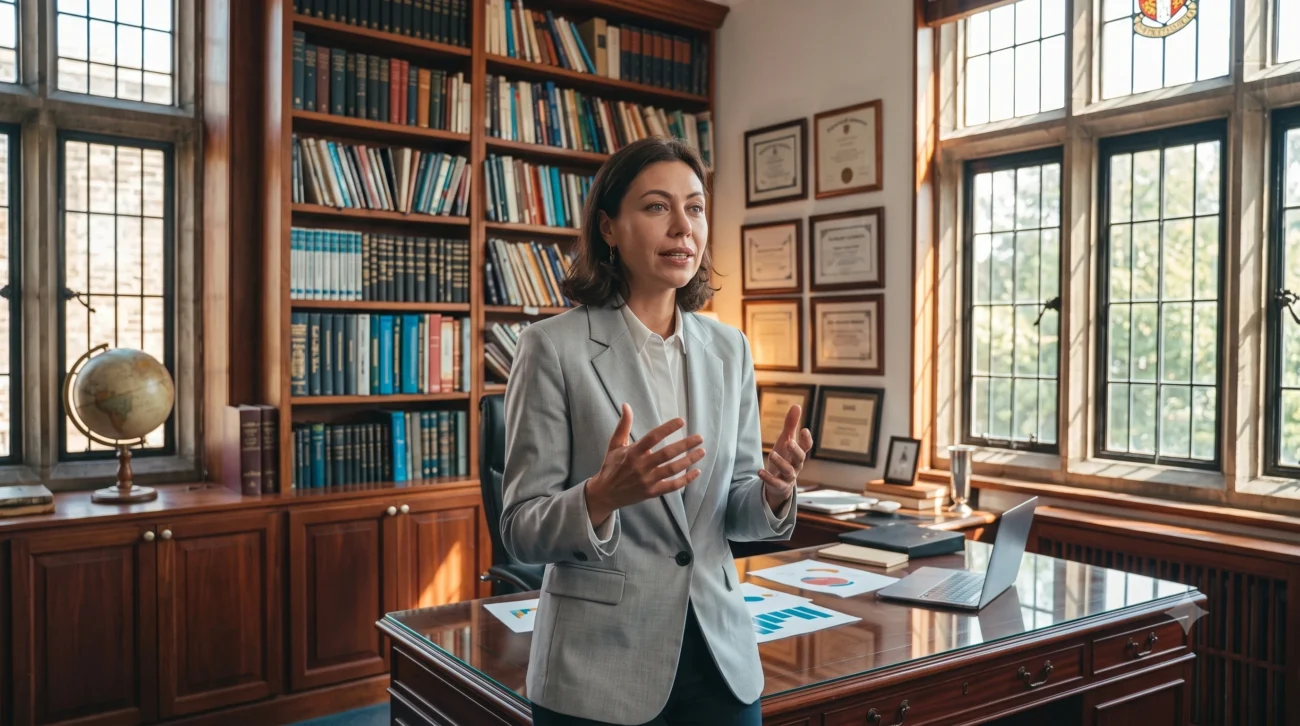
Victoria Elizabeth Bateman, better known professionally as Victoria N. Bateman or simply Victoria Bateman, is a British economist, economic historian, author, and public intellectual whose work has attracted attention both inside and outside academia. As a Fellow in Economics at Gonville and Caius College, University of Cambridge, she has built a reputation for researching economic history while also becoming one of Britain’s most recognizable academic campaigners through her outspoken views on feminism, women’s rights, and Brexit. Her willingness to combine scholarly work with provocative public protest has made her a distinctive figure in modern public debate.
Although many academics are known only within their fields, Bateman has reached a much wider audience through books, newspaper commentary, television appearances, and public discussions about gender, economics, and political freedom. Admirers view her as an independent thinker willing to challenge established ideas, while critics have questioned some of her methods. Either way, she remains one of the most discussed economists of her generation.
Early Life and Family
Victoria Bateman was born in 1979 in Tameside, England, and grew up in Lees, Oldham, in Greater Manchester. Public accounts of her childhood describe a working-class upbringing shaped by economic uncertainty. Her father worked in the sheet metal industry, while her mother handled payroll for the same business. When the family experienced financial hardship following business difficulties and her parents later divorced, Bateman witnessed first-hand the effects that economic instability could have on family life. Wikipedia+1
She has spoken about those experiences as an influence on her decision to study economics. Rather than viewing the subject as abstract theory, she became interested in understanding why economies succeed or fail and how those outcomes affect ordinary people.
Bateman has also described the encouragement she received from teachers and family members who recognized her academic ability. Those early influences helped shape a career that would eventually lead her to Cambridge and Oxford, two of Britain’s leading universities.
Education and Academic Foundations
Bateman attended Saddleworth School before completing her A-level studies at Oldham Sixth Form College, where she served as President of the Student Union. Her leadership experience reflected an early interest in public discussion and civic engagement.
She then studied Economics at Gonville and Caius College, University of Cambridge, earning her bachelor’s degree before continuing her education at the University of Oxford, where she completed master’s-level study and later earned a doctorate in economics. Wikipedia+1
Her academic training combined economic theory with historical analysis. Instead of focusing only on modern markets, Bateman became interested in how institutions, trade, and social change shaped economic development over centuries.
Academic Career at Cambridge
After completing her studies, Bateman joined the University of Cambridge, where she became a Fellow in Economics at Gonville and Caius College. She has also served as Director of Studies for the Economics Tripos, helping guide undergraduate economists through one of the United Kingdom’s best-known economics programs. Wikipedia+1
Her research concentrates on economic history, political economy, and the relationship between markets and long-term growth. Much of her scholarly work investigates how European markets developed before the Industrial Revolution and how economic institutions evolved over time.
Bateman has argued that understanding history is essential for understanding today’s economy. She has often criticized approaches that separate economics from history and other social sciences, saying that economic outcomes cannot be explained through mathematical models alone. Dr. Victoria Bateman+1
Research and Major Publications
Bateman first became widely known among economists through research examining historical market integration across Europe. Her studies of historical wheat prices challenged assumptions about how early European markets functioned, suggesting that market integration occurred much earlier than many had believed.
Her first major book, Markets and Growth in Early Modern Europe (2016), explored the relationship between expanding markets and economic development. The work drew on historical evidence to examine how trade networks affected growth before industrialization.
A broader public audience discovered her work through The Sex Factor: How Women Made the West Rich (2019). In that book, Bateman argued that women’s legal rights and personal freedoms were central drivers of long-term economic growth in Western societies. Rather than treating women’s emancipation as simply a social achievement, she presented it as a major economic force that increased productivity, education, entrepreneurship, and prosperity. Wikipedia+1
She later expanded many of her feminist arguments in Naked Feminism: Breaking the Cult of Female Modesty (2023), examining how cultural expectations surrounding women’s bodies continue to influence freedom, economics, and public life. More recently, she has published Economica: A Global History of Women, Wealth, and Power, continuing her exploration of gender and economic history. Wikipedia+1
Public Commentary and Media Work
Bateman has never limited her work to academic journals. She has written opinion pieces for publications including The Guardian, The Telegraph, The Conversation, Bloomberg, UnHerd, and CapX, discussing economics, politics, Brexit, feminism, and public policy. Wikipedia
She has also appeared on BBC radio and television programs, podcasts, and public debates. Her writing often seeks to connect historical evidence with current political questions, making complex economic ideas more accessible to general audiences.
Unlike many public commentators, Bateman frequently challenges both political left and right. Her arguments typically focus on individual freedom, market development, and the historical conditions that allow societies to prosper.
Feminism and Public Activism
Bateman is widely recognized for combining academic work with highly visible activism. She identifies as a feminist and argues that women’s bodies should not be treated as objects of shame or censorship. According to Bateman, restrictions surrounding female modesty have economic as well as cultural consequences because they influence women’s opportunities and freedom. Dr. Victoria Bateman+1
Her activism has often involved the use of nudity as political expression. She has appeared in artistic portraits, delivered public lectures, and participated in interviews while nude to challenge attitudes toward women’s bodies and to draw attention to issues she believes receive insufficient discussion.
These demonstrations have generated widespread debate. Supporters describe them as powerful statements about bodily autonomy and academic freedom. Critics argue that the protests distract from her research or rely too heavily on shock value. Bateman has consistently defended her approach, saying that symbolic protest can encourage conversations that would otherwise never happen.
Brexit and Political Views
Bateman became especially visible during the years surrounding the United Kingdom’s departure from the European Union. She emerged as one of academia’s strongest public critics of Brexit, arguing that leaving the EU would reduce trade, investment, scientific cooperation, and economic opportunity.
One of her most widely reported protests occurred in 2016 when she attended a Cambridge economics meeting nude with the words “Brexit leaves Britain naked” written across her body. She later repeated similar demonstrations in lectures and media appearances, using the slogan to argue that Brexit would leave Britain economically weaker. Wikipedia
Her Brexit activism attracted extensive media attention around the world. While some agreed with her economic arguments, others focused more on the unusual form of protest than on the underlying policy discussion.
Personal Life
Victoria Bateman keeps much of her personal life private despite her public profile. She is married to James Bateman, who has worked in asset management. Public reports indicate that the couple met while studying at Cambridge University. Wikipedia
Beyond that, Bateman has shared relatively little about her family life. Information regarding children has not been publicly confirmed, and she generally separates her academic work from her private relationships.
This balance between openness about political beliefs and privacy regarding family reflects a pattern seen throughout her public career.
Net Worth and Income Sources
No verified public record establishes Victoria Bateman’s net worth.
Online estimates occasionally appear, but they vary widely and are not supported by official financial disclosures. Any specific figure should therefore be treated as speculation rather than fact.
Her publicly known income sources include her position at the University of Cambridge, royalties from books, speaking engagements, journalism, and other academic activities.
Public Reputation
Bateman’s reputation is unusual because it spans several different audiences. Within academia, she is recognized for research on economic history, market integration, and women’s economic development. Among general readers, she is often associated with debates over feminism, free expression, and Brexit.
Her supporters praise her willingness to challenge established assumptions and to communicate academic ideas beyond universities. Critics question some of her methods or disagree with her political positions. Bateman herself has argued that disagreement is part of healthy democratic debate and that academics should not avoid controversial subjects simply because they attract criticism. Dr. Victoria Bateman+1
Recent Work and Current Status
As of 2026, Bateman continues her academic work at Cambridge while remaining active as an author and public speaker. Her recent writing continues to explore the relationship between economic development, gender equality, and political freedom.
Her latest publications build on themes developed throughout her career, particularly the idea that women’s rights are closely linked with economic prosperity rather than existing as separate social concerns.
She also continues to participate in interviews, lectures, and public events discussing economics, feminism, and cultural change.
Frequently Asked Questions
Who is Victoria Elizabeth Bateman?
Victoria Elizabeth Bateman, professionally known as Victoria Bateman or Victoria N. Bateman, is a British economist, economic historian, author, and Fellow in Economics at Gonville and Caius College, University of Cambridge. She is known for her research, books, and public advocacy on feminism and economic history.
How old is Victoria Bateman?
Victoria Bateman was born in 1979. Her exact birth date has not been consistently published in official university biographies, but her birth year is publicly documented. Wikipedia
What books has Victoria Bateman written?
Her best-known books include Markets and Growth in Early Modern Europe, The Sex Factor: How Women Made the West Rich, Naked Feminism: Breaking the Cult of Female Modesty, and Economica: A Global History of Women, Wealth, and Power. Wikipedia+1
Why is Victoria Bateman controversial?
Bateman has attracted attention for using nudity in artistic and political protests, particularly in campaigns supporting women’s rights and opposing Brexit. While supporters see these demonstrations as legitimate political expression, critics argue that they distract from her academic work.
Is Victoria Bateman married?
Yes. Publicly available information indicates that she is married to James Bateman, whom she met while studying at Cambridge University. Wikipedia
What is Victoria Bateman’s net worth?
There is no verified public figure for Victoria Bateman’s net worth. Although estimates appear online, none have been confirmed through reliable public records.
Conclusion
Victoria Bateman has built a career that combines scholarship with public engagement in ways few economists attempt. Her work ranges from detailed studies of European economic history to widely read books about women’s freedom and long-term economic development.
Her willingness to connect research with contemporary political debates has made her both influential and controversial. Rather than remaining inside academic circles, she has consistently taken her arguments into newspapers, television studios, lecture halls, and public demonstrations.
Whether readers agree with her conclusions or not, Bateman has become one of Britain’s most recognizable public economists. Her career reflects a belief that academic research should inform public debate and that economists have a responsibility to address questions extending beyond markets alone.
As discussions about gender, democracy, economic inequality, and political freedom continue, Victoria Bateman remains a prominent voice whose work reaches well beyond the university classroom.
