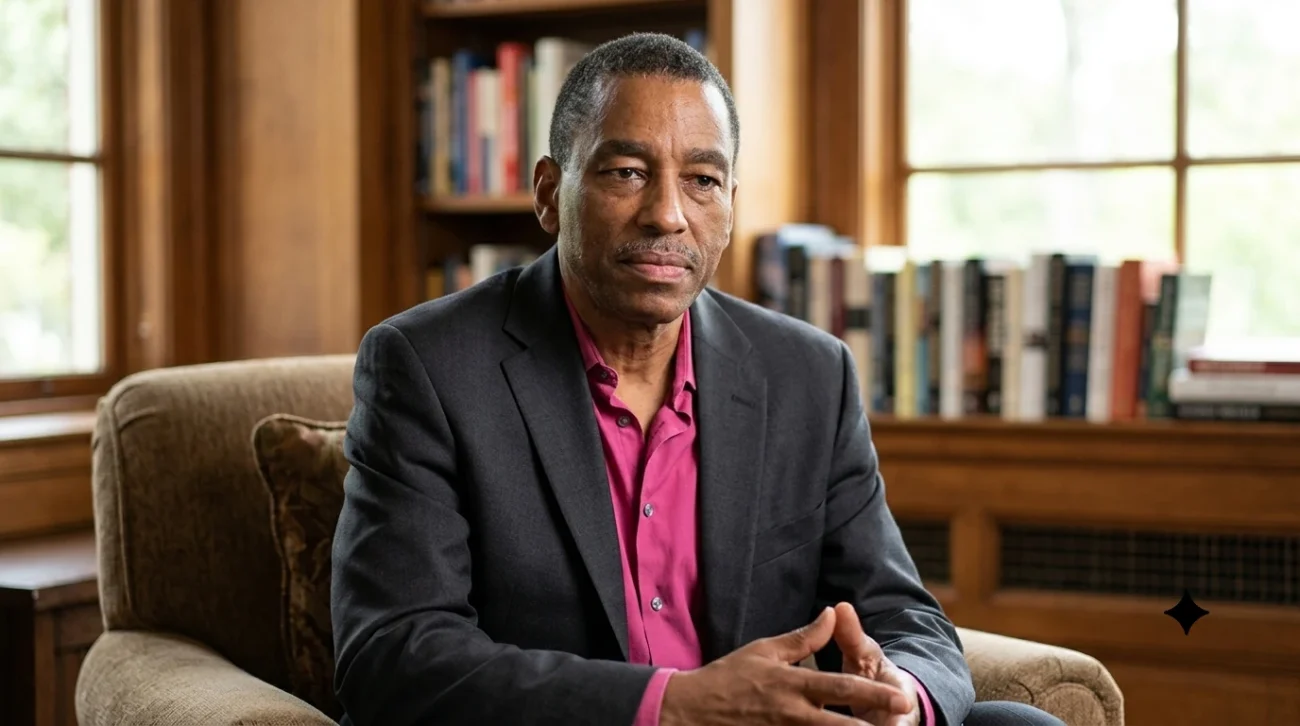
Roderick Jeffrey Watts has spent much of his career asking a demanding question: how do people move from recognizing injustice to taking meaningful action against it? Known professionally as Roderick J. Watts, he is an American community psychologist, licensed clinical psychologist, educator, researcher, and professor emeritus whose work has focused on critical consciousness, youth development, racial identity, civic engagement, and liberation psychology.
Outside academic circles, Watts is often searched because of his former marriage to Pulitzer Prize-winning journalist Isabel Wilkerson. Yet his own public record is substantial. Over several decades, he taught at major universities, published influential work on sociopolitical development, studied youth organizing, and helped expand psychology’s attention from individual behavior to the social systems that shape people’s lives.
Many personal details about Watts remain private. His exact date of birth, age, birthplace, parents, siblings, children, and current relationship status have not been publicly confirmed through reliable sources. What is well documented is a career built around education, clinical training, community research, and the belief that psychology should help people understand both themselves and the conditions around them.
Early Life and Family
Little verified information is available about Roderick Jeffrey Watts’s childhood or family background. Public university biographies and professional profiles concentrate on his academic career rather than his upbringing. As a result, claims about his parents, hometown, early household, or childhood experiences should be treated cautiously unless supported by direct records or statements from Watts.
His nationality is generally identified as American, and his professional life has been based mainly in the United States. He has also held international academic roles, including a visiting professorship at Stellenbosch University in South Africa. That experience fits the wider direction of his scholarship, which often connects psychology with history, culture, power, and social change.
Watts has not built a public identity around personal disclosure. Unlike public figures whose family stories form a large part of their careers, he is known primarily through his teaching, research, and professional service. That privacy makes it necessary to distinguish documented facts from assumptions repeated on biography websites.
Education and Clinical Training
Watts earned a Ph.D. in clinical-community psychology from the University of Maryland, College Park. Clinical-community psychology combines the study and treatment of individual psychological concerns with attention to families, neighborhoods, institutions, public policy, and social conditions.
That training shaped the central theme of his career. Watts did not approach human behavior as something produced only by personality or private choices. His work considered how racism, economic inequality, educational systems, cultural expectations, political exclusion, and unequal access to power can influence identity and well-being.
He also became a licensed clinical psychologist. His clinical background gave him experience with individual needs, while his community work pushed him to examine the larger forces affecting those needs. This balance between personal care and social analysis became one of the defining features of his professional life.
Early Academic Career
By the early 1990s, Watts was teaching psychology at DePaul University in Chicago. During this period, he published research on human diversity, community action, Black male development, and the relationship between psychology and culture.
One of his early articles, “Community Action Through Manhood Development,” appeared in the American Journal of Community Psychology in 1993. The paper examined programs designed to support African American boys and young men through cultural education, personal growth, social responsibility, and community participation.
Watts was interested in approaches that did not describe young Black men only through problems or risk factors. His research asked how identity, history, cultural knowledge, mentorship, and collective responsibility could support healthy development. It also examined whether youth programs helped participants understand the social conditions affecting their lives.
In 1994, he co-edited Human Diversity: Perspectives on People in Context with Edison J. Trickett and Dina Birman. The book encouraged psychologists and other social researchers to study people within their cultural and social settings rather than treating one group’s experiences as a universal standard.
He later co-edited Manhood Development in Urban African-American Communities, published in 1997. The collection addressed subjects including racial identity, spirituality, anger, rites of passage, cultural development, and critical awareness among African American males.
Academic Appointments and Teaching Career
Watts’s career included teaching and research positions connected with DePaul University, Yale University’s School of Medicine, Georgia State University, Hunter College, the City University of New York Graduate Center, and Pacifica Graduate Institute.
At Georgia State University, he coordinated a clinical-community psychology program. The role placed him at the meeting point of professional psychological training and community-based research. It also reflected his long-standing interest in preparing psychologists to consider both individual treatment and social context.
In 2010, Watts joined the CUNY Graduate Center as a professor in the Ph.D. Program in Social Welfare. He also taught at Hunter College’s Silberman School of Social Work. His courses and research interests included African American psychology, community psychology, social identity, program evaluation, qualitative research, youth civic engagement, and liberation studies.
CUNY later listed him as professor emeritus in psychology and Africana studies. Professional biographies also identify him as a former Hunter College professor and an adjunct faculty member at Pacifica Graduate Institute.
His teaching career crossed several academic fields. Psychology remained his main professional base, but his work also drew from social work, education, political studies, Africana studies, youth development, and community organizing.
Sociopolitical Development
Watts is closely associated with the theory of sociopolitical development. The term describes how people gain the knowledge, confidence, emotional capacity, analytical skills, and practical experience needed to understand social inequality and respond to it.
In a widely cited 2003 article written with Nat Chioke Williams and Robert J. Jagers, Watts presented sociopolitical development as a process through which people learn to examine power, oppression, and social conditions. The framework also considers whether individuals believe they can influence public life and whether they have opportunities to act with others.
This approach challenges the idea that personal development can be separated from politics and institutions. A student may gain confidence but still lack the tools to question unequal treatment. A young person may understand discrimination but have no safe or realistic path for responding to it.
Watts’s work argued that awareness alone is not enough. People also need relationships, skills, practice, emotional support, and access to organizations capable of turning ideas into action. In this sense, sociopolitical development is not simply about holding political opinions. It is about learning how social systems work and how collective change can happen.
Critical Consciousness and Liberation Psychology
Another major area of Watts’s research is critical consciousness. The concept is strongly associated with Brazilian educator Paulo Freire and refers to the ability to recognize social injustice, examine its structural causes, and take action to change unfair conditions.
Watts helped adapt critical consciousness for psychological research. In work with Matthew Diemer and Adam Voight, he described three connected elements: critical reflection, political efficacy, and critical action. Reflection involves understanding the deeper causes of inequality. Political efficacy involves believing that change is possible. Action involves participating in efforts to address injustice.
His research also pointed to a common weakness in educational and youth programs. Some programs encourage participants to discuss racism, poverty, or exclusion but do not provide real opportunities to organize, lead, or influence decisions. That gap can leave people informed but powerless.
Liberation psychology provided a wider home for these ideas. The field asks psychologists to consider oppression, history, culture, and collective struggle instead of treating every form of distress as a private condition. Watts argued that counseling and personal support can be valuable while still being incomplete if they ignore the systems contributing to harm.
Work With Young People and Community Organizing
Youth development remained a central part of Watts’s career. He studied how young people learn civic skills, develop political identities, join community organizations, and take part in campaigns for social change.
His research treated youth organizing as a setting for growth rather than simply a form of protest. Young participants can learn public speaking, negotiation, teamwork, research, strategy, decision-making, and conflict management. They may also gain a stronger sense of belonging and personal responsibility.
Watts helped lead the Powerful Youth, Powerful Communities project, which examined youth community organizing across several locations. The project focused on what young organizers learned, how organizations supported that learning, and how youth participation affected both individuals and communities.
Later work also examined the emotional demands of racial-justice organizing. Activism can produce hope, pride, connection, anger, fear, grief, and exhaustion. Watts’s research recognized that groups need ways to discuss those emotions and support members if they expect participation to last.
This attention to emotion made his work more realistic. Political action is not driven by ideas alone. People need trust, care, shared purpose, and ways to recover from setbacks.
Marriage to Isabel Wilkerson
Roderick Jeffrey Watts was married to journalist and author Isabel Wilkerson. A public wedding notice recorded that Isabel Alexis Wilkerson and Roderick Jeffrey Watts married in November 1989 at Oxon Hill Manor in Fort Washington, Maryland.
Wilkerson later became widely known for her work at The New York Times, where she won the Pulitzer Prize for Feature Writing in 1994. She also wrote the bestselling books The Warmth of Other Suns and Caste: The Origins of Our Discontents.
Watts is now described as Wilkerson’s former husband. Wilkerson later married Brett Kelly Hamilton in 2009. Hamilton died in 2015.
Reliable public information about Watts and Wilkerson’s marriage is limited. The date of their separation or divorce has not been widely documented in dependable sources, and neither appears to have made the relationship a major subject of public discussion. Claims about how they influenced each other’s work are not publicly confirmed.
There is also no dependable public record confirming whether Watts has children. His current relationship status remains private.
Net Worth and Income Sources
Roderick Jeffrey Watts’s net worth is not publicly confirmed. Figures appearing on entertainment and biography websites do not appear to come from financial disclosures, court documents, business filings, or direct statements from Watts.
His known sources of professional income have likely included university salaries, clinical psychology, academic consulting, research work, program evaluation, teaching, training, and publication-related activity. The exact amounts are private.
Watts is not known for building a public business empire or commercial brand. His career has been based mainly in higher education, clinical work, research, and community programs. Any estimate assigning him a precise net worth should be treated as speculation.
Public Image and Professional Reputation
Within his field, Watts is respected for connecting psychology with social justice and community action. His work has influenced research on critical consciousness, youth activism, Black identity, civic participation, and political development.
He is also identified as a fellow of the American Psychological Association and the Society for Community Research and Action. These affiliations reflect his standing within professional psychology and community research.
Watts has maintained a lower public profile than many writers or commentators working on race and inequality. He rarely appears in mainstream celebrity coverage and does not seem to seek attention through personal branding. His reputation rests mainly on scholarship, teaching, and work with students and community organizations.
That quieter profile can create confusion online. Some websites identify him mainly through his marriage to Wilkerson, while others repeat unsupported personal details. The academic record presents a fuller picture: he is a scholar whose career addressed how people understand power and develop the capacity to challenge injustice.
Recent Work and Current Status
As of 2026, Watts is publicly listed as professor emeritus at the CUNY Graduate Center. Professional profiles also connect him with Pacifica Graduate Institute and advisory work involving community and social-justice organizations.
There has been no widely reported major new appointment, book release, or public controversy involving Watts during 2024, 2025, or the first part of 2026. His current day-to-day activities are not extensively documented.
His recent public standing is best described as that of a retired or emeritus professor whose ideas continue to influence active research. Scholars still draw on his work when studying youth organizing, critical consciousness, civic engagement, racial justice, and the emotional demands of political participation.
Frequently Asked Questions
Who is Roderick Jeffrey Watts?
Roderick Jeffrey Watts is an American community psychologist, licensed clinical psychologist, educator, and professor emeritus. He is known professionally as Roderick J. Watts and is recognized for research on critical consciousness, sociopolitical development, youth organizing, Black identity, and liberation psychology.
How old is Roderick Jeffrey Watts?
His exact date of birth and age are not publicly confirmed through reliable sources. Websites that provide a specific age without citing an official record should be treated cautiously.
Was Roderick Jeffrey Watts married to Isabel Wilkerson?
Yes. Watts and Isabel Wilkerson married in November 1989 in Fort Washington, Maryland. He is now identified as her former husband, but the details and timing of their separation have remained private.
Does Roderick Jeffrey Watts have children?
There is no dependable public source confirming whether Watts has children. He has kept his family life outside the public record.
What is Roderick Jeffrey Watts known for?
He is best known for his work on sociopolitical development and critical consciousness. His research examines how people learn to understand inequality, gain confidence in their ability to create change, and participate in civic or community action.
What is Roderick Jeffrey Watts’s net worth?
His net worth has not been publicly verified. Any precise figure found on biography or celebrity websites is speculative unless supported by reliable financial records.
What is Roderick Jeffrey Watts doing now?
As of 2026, he is listed as professor emeritus at the CUNY Graduate Center. Public profiles also associate him with Pacifica Graduate Institute and advisory work, although his current daily schedule and private activities are not publicly known.
Conclusion
Roderick Jeffrey Watts built a career around the idea that psychology should do more than explain how people adapt. It should also help them understand the social forces affecting their lives and develop the capacity to act.
His work gave researchers and educators clearer ways to study critical awareness, political confidence, youth leadership, and community participation. It also warned that teaching people to recognize injustice without providing paths for action can leave them discouraged rather than empowered.
Public curiosity about Watts may begin with his connection to Isabel Wilkerson, but his professional story stands on its own. He belongs to a group of psychologists who pushed the field to take culture, history, race, and power more seriously.
His private life remains largely private, and that boundary should be respected. The strongest account of Roderick Jeffrey Watts is found not in unsupported personal claims, but in the students he taught, the research he published, and the continuing influence of his ideas about human development and social change.
