Not all CBD products offer the same level of quality and safety, making independent verification increasingly important. Third party testing by certified labs is a key method for assuring consumers that what is stated on a label accurately reflects what is inside the bottle. Understanding how these tests work gives you greater confidence and clarity in a market where standards continue to evolve.
CBD products can vary in potency, ingredients, and the presence of impurities, which creates challenges for consumers aiming to make informed decisions. The example of Mama Kana CBD oil underlines how important transparent, accurate product verification is, especially as CBD regulations are not universally applied. As the market expands, understanding how third party testing works helps consumers choose products that are reliably manufactured and checked for unwanted contaminants. Third party lab results give an important benchmark for confirming product labels and reducing uncertainty about what you are purchasing.
How independent laboratories assess CBD product contents
Third party testing involves sending CBD product samples to an independent laboratory with no affiliation to the manufacturer or retailer. These labs must operate separately from the brand to avoid conflicts of interest and ensure unbiased, dependable results.
This process checks the reported levels of CBD, THC, and other cannabinoids, providing reassurance about product potency and legal compliance. Credible laboratories are equipped to precisely measure a wide range of compounds, allowing you to confirm that the quantities listed on the label match the actual contents.
Independent laboratories typically use advanced analytical methods such as high-performance liquid chromatography (HPLC) or gas chromatography-mass spectrometry (GC-MS) to evaluate CBD products with precision. These scientific techniques separate and identify individual compounds within a sample, allowing technicians to quantify cannabinoid concentrations accurately. The testing process follows standardised protocols that ensure consistency across different batches and products, making it possible to compare results reliably. Accredited labs often hold certifications from recognised bodies that verify their technical competence and adherence to quality standards, which adds another layer of credibility to their findings.
What cannabinoid content and safety tests reveal
Cannabinoid potency tests determine the amounts of CBD and other cannabinoids to support the accuracy of product labelling. Because inaccurate labelling can occur, independent verification clarifies what is truly in the product.
Testing specifically for THC confirms that the product meets legal limits and does not contain higher-than-expected levels of psychoactive components. Comprehensive testing can also detect contaminants such as pesticides, heavy metals, residual solvents from extraction, and microbial organisms like mould. This thorough examination addresses both safety concerns and legal requirements for CBD products.
Understanding the certificate of analysis and its key data
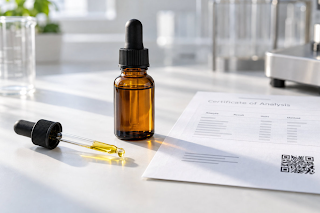
Each tested batch of a product generally receives a certificate of analysis (COA), which records the detailed testing results. Authentic COAs include batch numbers and test dates, helping you verify that the information corresponds with the product you have.
COA results tables outline compound concentrations and may indicate if any components fall outside specified thresholds. Batch numbers, sample identifiers, and clear markers assist in cross-referencing lab data against the product label, ensuring the COA is relevant to the exact item you possess.
Red flags and transparency concerns consumers should note
Some products may lack a COA or offer documentation that is outdated or incomplete, which can indicate insufficient verification or unsupported product claims by credible third party testing.
Brands might only provide in house reports or fail to evaluate critical contaminants. If the COA’s batch number does not match your product or lacks thorough data panels, this signals a potential lack of transparency and may suggest you should reconsider the product’s reliability.
How robust CBD testing supports user experience
Reliable third party testing improves product safety and consistency for CBD consumers. When a product has a documented cannabinoid profile, users can have more confidence in dosing decisions, which is important for applications requiring precise intake.
Rigorous testing also limits exposure to harmful byproducts or impurities, adding a level of health protection. By establishing clear benchmarks for product contents, third party testing gives support to consumer trust in a market where reliable standards are still developing.
