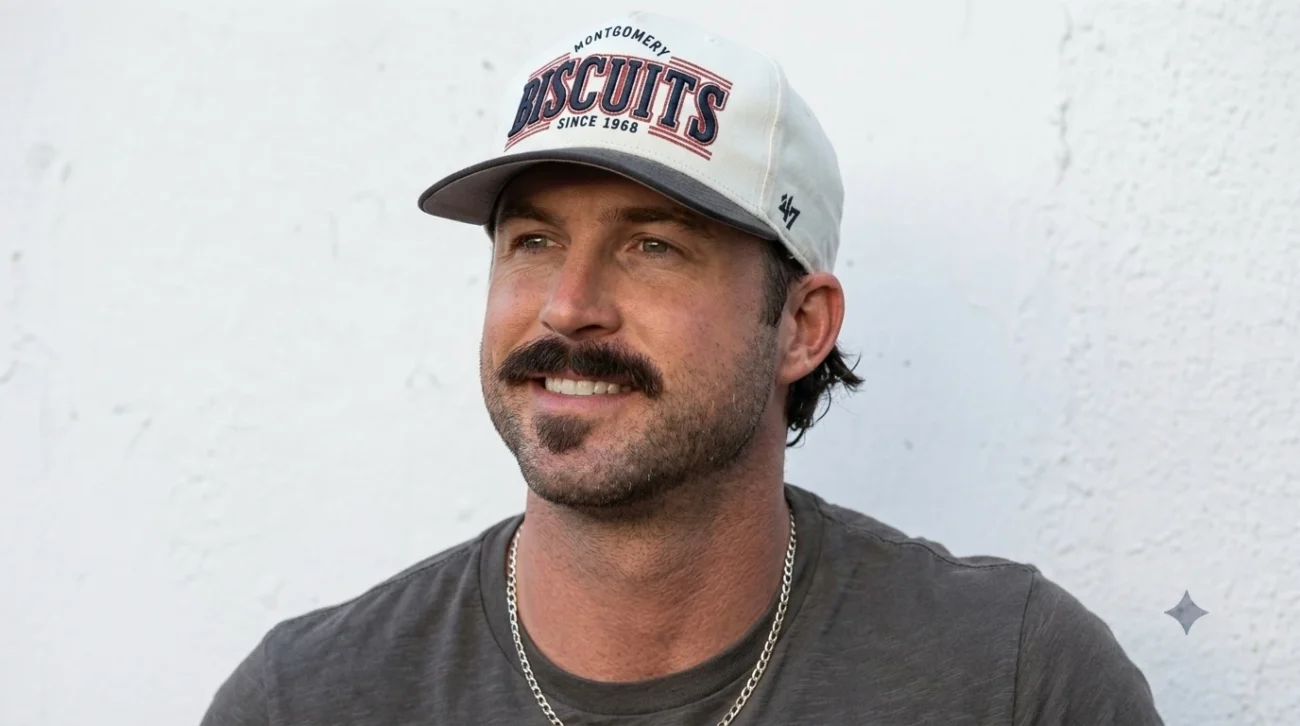
Riley Green is 37 years old as of August 5, 2026. Born on October 18, 1988, the Alabama country singer will turn 38 on October 18, 2026. His age is easy to calculate, but the path behind it explains why many listeners assume he is younger or that his career began more recently than it did.
Green reached national country radio around age 30, after years of performing in bars, building a regional following, releasing music independently, and playing college football. By the time songs such as “There Was This Girl” and “I Wish Grandpas Never Died” introduced him to a wider audience, he already had a clear musical identity rooted in family, small-town life, and northeastern Alabama.
His rise has continued well into his 30s. Awards, major tours, high-profile collaborations, television appearances, and acting work have made the period from 2024 through 2026 one of the most visible stretches of his career.
Riley Green’s Age and Full Name
Riley Green’s full name is Johnathan Riley Green. He was born on October 18, 1988, and has used Riley, his middle name, throughout his personal and professional life. He has explained publicly that people close to him have always called him Riley rather than Johnathan.
As of August 5, 2026, Green is 37 because his October birthday has not yet arrived. A simple subtraction of 1988 from 2026 produces 38, but that calculation is only correct after October 18. From October 18, 2026, through October 17, 2027, he will be 38.
The singer released his third studio album, Don’t Mind If I Do, on October 18, 2024, the day he turned 36. That release tied an important career milestone directly to his birthday and made the date more visible to fans.
Early Life and Family Background
Green grew up in Jacksonville, Alabama, a small city in the northeastern part of the state. His hometown remains central to his public identity and songwriting. Even after moving into arenas, awards shows, and national television, he has continued to present himself as closely connected to Jacksonville and the surrounding community.
Family helped shape both his music and his outdoor interests. Green has often spoken about the influence of his grandfathers, who introduced him to older country music, hunting, and traditions that later appeared in his songs. Those relationships supplied the emotional foundation for “I Wish Grandpas Never Died,” one of the most personal and widely recognized songs in his catalog.
His family life beyond what he has chosen to discuss publicly remains largely private. Details about his parents and extended relatives are not always consistently reported, and he has not built his career around exposing private family matters. What is clear is that his upbringing provided many of the values, memories, and cultural references that continue to define his work.
Education and College Football
Before he became known as a country singer, Green attended Jacksonville State University and played football for the Jacksonville State Gamecocks. He was part of the program from 2007 through 2009 and played quarterback.
Green’s football years placed him roughly between the ages of 18 and 21. His time in college athletics came well before his national music breakthrough and gave him a public identity in his hometown before country radio listeners knew his name.
Some online biographies overstate this part of his story. Green played college football, but he did not have an NFL career. His background is best described as that of a former Jacksonville State quarterback who later built a professional career in music.
Football remains part of his connection to Jacksonville. He has continued to follow the university’s team and has appeared in content connected to the school and its athletics department.
Early Music Career
Green did not become a national recording artist immediately after college. He spent years playing local bars, restaurants, and regional venues while developing his songwriting and stage presence. That period allowed him to learn what connected with live audiences before a major record label became involved.
His early music reflected the subjects that would later define his commercial work: Alabama life, family ties, relationships, trucks, hunting, and memories of a changing rural culture. Rather than adopting those themes after signing a record deal, Green had already built his identity around them.
He also appeared on CMT’s reality competition series Redneck Island. The show gave him some television exposure, but it did not instantly turn him into a mainstream country star. His progress remained gradual, based largely on live performances and the regional circulation of his songs.
By the time he entered the major-label system, Green had already spent years doing the work often hidden from listeners. His national debut was not the beginning of his musical life. It was the point at which a much larger audience began to notice it.
Career Breakthrough
Green’s national career gained momentum in 2018, when he released major-label material through Big Machine Label Group. He was 29 during the first part of that year and turned 30 in October.
“There Was This Girl” became his first major country-radio hit and reached No. 1. The song introduced Green as a singer with a traditional streak, a direct writing style, and an established Southern identity. It also proved that his regional appeal could carry into the national market.
His debut studio album, Different ’Round Here, arrived on September 20, 2019. Green was still 30 at the time and turned 31 less than a month later. The record included “There Was This Girl” and “I Wish Grandpas Never Died,” two songs that helped establish his public reputation.
“I Wish Grandpas Never Died” became especially important because of its emotional connection to Green’s family. Its reflections on grandparents, faith, small towns, and cultural change reached listeners who recognized their own experiences in the song. It also showed that Green could build a career on more than radio-friendly relationship songs.
In 2020, the Academy of Country Music named him New Male Artist of the Year. Green was 31 when the award was announced. The title described his arrival as a nationally recognized performer, not the start of his career, which had already included years of regional work.
Albums, Collaborations, and Major Recognition
After his debut, Green continued releasing music while building his touring audience. His 2021 project Behind the Bar kept him active during a period when live entertainment had faced major disruption.
His second studio album, Ain’t My Last Rodeo, was released on October 13, 2023. Green was 34 and turned 35 five days later. The album included “Damn Good Day to Leave” and a new version of “Different ’Round Here” featuring Luke Combs.
That collaboration connected Green with one of country music’s largest contemporary stars, but it also suited his established style. Both singers had built audiences through songs about working-class life, hometown identity, and straightforward emotional storytelling.
Green released Don’t Mind If I Do on his 36th birthday in October 2024. The project continued his preference for traditional country sounds and stories drawn from rural life, romantic disappointment, and personal memory.
His work with Ella Langley brought another surge of attention. Their duet “you look like you love me” became a commercial and awards success, earning major recognition from both the Country Music Association and the Academy of Country Music. The collaboration introduced Green to listeners who may not have followed his earlier albums and strengthened his position as a duet partner.
The song’s success also marked a new stage in his career. Green was no longer being discussed only as the singer behind his first radio hits. By his mid-30s, he had developed into an established touring act with several award-winning collaborations and a broader industry presence.
Acting and Television Work
Green expanded into acting with a role in Marshals, a television drama connected to the world of Yellowstone. He played Garrett, a former Navy SEAL, marking his first major acting role.
The move did not signal a departure from music. Instead, it showed that Green’s public career had grown beyond recording and touring. His existing image as an outdoorsman and Southern country performer made him a natural fit for a drama centered on law enforcement, the American West, and emotionally restrained characters.
NBC also announced Green as a coach for Season 30 of The Voice. He joined a coaching lineup that included Kelly Clarkson, Adam Levine, and Queen Latifah. The season was scheduled to premiere in September 2026, shortly before Green’s 38th birthday.
Appearing on The Voice places him before an audience much larger and more varied than country radio alone. It also gives viewers a chance to see him evaluate and guide other singers rather than perform only his own music.
Relationships and Private Life
Green’s romantic life has attracted regular attention online, especially when he has worked closely with female artists or appeared with them publicly. Much of that discussion has been based on social-media speculation rather than confirmed statements.
He has not publicly confirmed a wife or children. His current relationship status is also not consistently established through reliable public reporting. For that reason, claims naming a spouse, fiancée, or long-term partner should be treated carefully unless Green or an authorized representative confirms them.
His collaborations, including his work with Ella Langley, have sometimes led fans to assume a personal relationship. Professional chemistry in a song, video, or performance is not proof of a private romance.
Green has spoken about the unusual rumors that come with fame and has suggested that he tries not to take them too seriously. His approach has generally been to keep the focus on music while protecting much of his personal life.
Net Worth and Income Sources
Riley Green’s exact net worth is not publicly confirmed. Celebrity finance websites publish estimates, but those figures often lack supporting records and can differ widely. Presenting any one of them as an established fact would create a false sense of precision.
His known income sources include recording royalties, songwriting, concert touring, merchandise, television work, and appearances. Major country tours can generate substantial revenue, but gross ticket sales are not the same as an artist’s personal earnings. Promoters, venues, staff, travel, production, management, taxes, and other expenses reduce the amount an artist retains.
Green may also earn money from licensing, streaming, publishing rights, and brand-related work. The private terms of his recording, touring, acting, and television contracts have not been publicly disclosed.
The most accurate conclusion is that Green has built a successful national entertainment career, but his personal wealth cannot be verified from public information alone.
Public Image
Green’s public image rests on consistency. His songs, clothing, interviews, outdoor interests, and Alabama background generally point toward the same identity: a country performer who draws heavily from the place where he grew up.
That consistency has helped him connect with listeners who prefer country music that sounds tied to recognizable communities and family experiences. His work often looks backward, but it does so through specific memories rather than vague nostalgia.
He has also benefited from reaching fame later than some performers. Green has said that he is glad major attention did not arrive during his early 20s, when he might have been less prepared to manage it. His gradual rise appears to have given him time to form a clear sense of what kind of artist he wanted to be.
The same image can create limits. Listeners who prefer pop-driven country may find his traditional presentation less appealing, while some traditionalists may debate how closely any mainstream artist fits older country standards. Green’s success comes partly from occupying the space between those audiences.
Recent Work and Current Status
At 37, Green remains active as a recording artist and touring performer. His 2026 schedule has included major live commitments as his audience has continued to grow beyond the regional following that supported his early career.
His fourth studio album, That’s Just Me, was announced for release on September 18, 2026. The planned release date falls one month before his 38th birthday and extends a productive period that began with the success of Don’t Mind If I Do and his work with Ella Langley.
Green’s television commitments have also made 2026 an important year. His acting debut and announced role on The Voice expose him to viewers who may know little about his albums or football background.
The larger workload has come with practical pressures. Green has discussed the fatigue created by touring, filming, and maintaining a demanding public schedule. His current challenge is no longer gaining attention; it is managing several forms of success at once.
Frequently Asked Questions
How old is Riley Green?
Riley Green is 37 years old as of August 5, 2026. He will turn 38 on October 18, 2026.
What is Riley Green’s birthday?
Riley Green was born on October 18, 1988. His third studio album, Don’t Mind If I Do, was released on his 36th birthday in 2024.
What is Riley Green’s real name?
His full name is Johnathan Riley Green. He has always gone by Riley, his middle name, in both his private and professional life.
Where is Riley Green from?
Green is from Jacksonville, Alabama. His hometown, family memories, and experiences in northeastern Alabama have had a lasting influence on his songwriting.
Did Riley Green play football?
Yes. He played quarterback at Jacksonville State University from 2007 through 2009. He was a college athlete, not an NFL player.
Is Riley Green married?
A marriage has not been publicly confirmed. Green keeps his relationships private, and many claims about his dating life come from speculation rather than verified announcements.
What is Riley Green’s net worth?
His exact net worth is not publicly confirmed. Online estimates should be treated cautiously because his contracts, expenses, assets, and private financial records are not available to the public.
Conclusion
Riley Green’s age is only one part of why his story interests country music listeners. At 37, he has already moved through several distinct lives: college quarterback, regional bar performer, major-label newcomer, award-winning singer, touring headliner, actor, and television coach.
His career also challenges the idea that every successful musician must become famous in early adulthood. Green spent years forming his style before national recognition arrived, and that slower path gave his music a strong connection to place, family, and lived experience.
He has kept much of his private life outside public view, leaving fans with fewer confirmed details about relationships and finances than online speculation might suggest. That privacy does not weaken his biography; it draws a useful boundary between the artist’s work and the parts of his life he has not chosen to share.
As he approaches 38, Green’s public role continues to expand. The lasting measure of his career will not be how old he was when he became famous, but whether the songs and stories that carried him out of Jacksonville remain convincing as the stages become larger.
