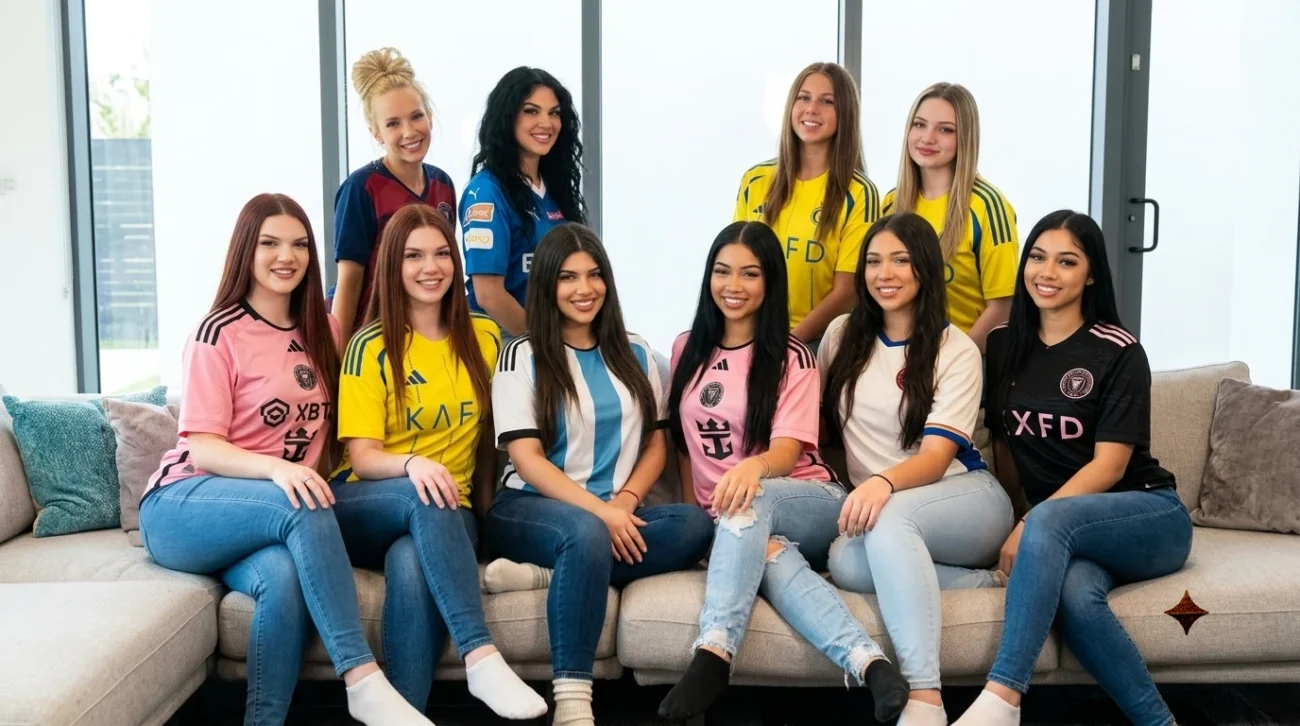
Bop House became one of the internet’s most recognizable creator collectives within months of its December 2024 launch. Founded in South Florida by Sophie Rain and Aishah Sofey, the group brought several young female social-media personalities into a shared content operation built around TikTok, Instagram, livestreams, and paid subscription platforms.
Unlike a person, Bop House has no birth date, family background, or private life in the usual biographical sense. Its biography is the story of a brand: how it started, who built it, why it attracted a large audience, how its membership changed, and why questions about money, safety, adult content, and younger viewers became central to its public image.
Bop House at a Glance
Bop House is a South Florida-based collective of female creators associated with mainstream social platforms and OnlyFans. Sophie Rain and Aishah Sofey founded the group in December 2024, presenting it as a shared home and production space where members could film together, promote one another, and grow their individual businesses.
The original lineup included Rain and Sofey alongside Camilla Araújo, Alina Rose, Julia Filippo, Summer Iris, Ava Reyes, and Joy Mei. Most were already active online before joining, but the group gave them a common identity that could be marketed across several accounts at once.
The name comes from internet slang. “Bop” can refer to a catchy song, but it has also been used as an insulting term for a woman perceived as sexually active. Some online creators have tried to reframe it with expressions such as “baddie on point,” though the word’s controversial meaning remains part of the brand’s public image.
How Bop House Began
Bop House introduced itself through social-media posts in December 2024. Rather than launching as a traditional entertainment company with a formal press release, it emerged through short videos, member introductions, group photos, and shared appearances.
The concept followed an established creator-house formula. Earlier collectives such as Team 10 and Hype House had shown that influencers could increase their reach by living or filming together. Shared spaces made collaborations easier, created recurring storylines, and allowed members to trade access to one another’s audiences.
Bop House adapted that model for creators whose income was closely tied to adult subscription content. Public-facing videos usually stayed within the rules of TikTok and Instagram, while individual profiles directed interested followers toward paid platforms.
Its South Florida setting also became part of the appeal. Large homes, pools, waterfront views, and luxury interiors gave the content a recognizable visual identity. The house was not merely a residence; it was a filming location, advertisement, workplace, and symbol of the earnings members said their online businesses had produced.
Sophie Rain and Aishah Sofey as Founders
Sophie Rain was the most widely known member at the time of Bop House’s launch. She had already gained attention for her large self-reported OnlyFans earnings and for discussing personal boundaries that appeared to contrast with assumptions about her work.
Rain’s public identity combined adult-content marketing with statements about religion and virginity. That contrast made her a frequent subject of interviews, commentary, and online debate. It also meant that Bop House entered the public eye with a founder who already attracted both strong support and intense criticism.
Aishah Sofey brought another established audience and remained closely associated with the group after several early members left. As the roster changed, she became the most consistent link between the original Bop House and its later version.
Camilla Araújo is sometimes described online as a founder, but launch-era reporting identified Rain and Sofey as the co-founders. Araújo was an original member and one of the group’s best-known personalities, but there is no reliable public record establishing her as a co-founder.
The Original Members
The first Bop House cast consisted of eight creators: Sophie Rain, Aishah Sofey, Camilla Araújo, Alina Rose, Julia Filippo, Summer Iris, Ava Reyes, and Joy Mei. Their individual followings varied, which helped the collective reach several overlapping audiences.
Large creators could introduce lesser-known members to millions of viewers. Newer personalities, in turn, gave the group fresh storylines and appearances. A dance video, prank, or staged argument could feature several members and circulate through multiple personal accounts.
This system encouraged fast growth, but it also created differences in influence. Members with larger audiences contributed more attention to the group and could have greater power over its public direction. Those with smaller followings had more to gain from membership but could become more dependent on the collective’s visibility.
The group never published a full account of its contracts, ownership structure, or revenue-sharing arrangements. It remains unclear whether members held formal stakes in the Bop House name, paid equal portions of housing costs, or worked under separate agreements with managers.
How the Bop House Business Worked
Bop House’s central business was attention. The group produced a steady flow of short videos designed to perform well on platforms that reward frequent posting, recognizable faces, and repeated viewer interaction.
Most public clips were not explicit. They commonly featured dances, coordinated outfits, jokes, challenges, staged conflicts, and scenes of life inside the house. The content could reach a broad audience without violating the strictest platform rules.
The commercial value came from what happened next. Viewers who became interested in a member could visit her personal profile, follow additional links, and eventually reach paid subscription pages. This created a path from free entertainment to individual paid content.
The model also reduced production difficulties. Members did not need to arrange every collaboration separately because potential co-stars and filming spaces were already available. Several videos could be recorded in one session and distributed across different accounts.
Bop House also turned personal interaction into a product. Friendships, disagreements, rumors, departures, and auditions became part of the public story. Some conflicts appeared to be exaggerated or staged, making it difficult for viewers to separate genuine tension from planned entertainment.
Reported Earnings and Net Worth Claims
Money became one of the biggest reasons people searched for Bop House. Members made claims that the collective generated millions of dollars in a single month, including a widely repeated figure of $10 million for December 2024.
Those numbers have not been independently audited. Public reporting usually traced them back to creator statements, social posts, or screenshots rather than tax records, bank documents, or verified company accounts.
The phrase “Bop House net worth” can also be misleading. Bop House does not appear to operate as a publicly valued company with disclosed assets and liabilities. Most income belonged to individual creators through their personal subscription accounts, sponsorships, social-media deals, and other ventures.
Even accurate gross revenue would not equal take-home profit. OnlyFans keeps a percentage of creator payments, and members may also pay taxes, managers, editors, photographers, security staff, lawyers, travel costs, housing expenses, and other business fees.
For that reason, no credible exact net-worth figure can be assigned to Bop House as a group. The safest conclusion is that it became a commercially successful promotional brand, while its precise earnings and ownership value remain private and not publicly confirmed.
Housing Costs and Daily Operations
Reports placed the monthly rent for Bop House properties in the tens of thousands of dollars, with some accounts citing figures between roughly $75,000 and $100,000. The group appeared to use more than one South Florida property as its membership and security needs changed.
A large house could be financially practical because it served several purposes at once. It provided living space, production rooms, recognizable sets, and a backdrop that communicated wealth and exclusivity.
The cost went beyond rent. Successful creator collectives require cameras, lighting, editing, management, transportation, wardrobe, cleaning, legal support, and online account administration. Bop House also faced security expenses after viewers and alleged intruders located properties connected with the members.
The exact amount paid by each creator is not publicly confirmed. It is also unclear whether every person appearing in Bop House content lived at the property full time. Creator houses often function as shared studios and temporary gathering places rather than permanent homes for every listed member.
Safety and Privacy Problems
Bop House’s growing fame created risks that went far beyond negative comments. In early 2025, an alleged intruder entered a Fort Lauderdale property associated with the group, prompting a police response that reportedly included a SWAT team.
Members also described people appearing outside the house, approaching by boat, knocking on doors, and trying to see or contact creators. The group later moved and increased security, though relocation could not remove the basic danger created by highly visible homes.
Creator houses are especially vulnerable because the residence itself appears in the content. Windows, waterfront views, entrances, furniture, and nearby buildings can help determined viewers identify a location even when no address is published.
Online risks were also serious. Popular members faced impersonation, stolen content, fake accounts, and AI-generated images. These problems made it harder for audiences to know which accounts and materials were authentic.
Departures and Major Changes
The original Bop House lineup did not remain together for long. Joy Mei was reported to have left during the group’s early period, though later appearances and conflicting online lists caused uncertainty about her formal status.
Sophie Rain announced her departure in July 2025. She said she felt she was losing her individual voice and described the environment as increasingly controlling. Her exit marked a major change because she had been a founder and the group’s most visible early member.
Camilla Araújo left soon afterward to focus on her own work and personal brand. Her departure removed another major personality from the original cast and added to questions about whether Bop House could survive without its best-known members.
The group responded in part by holding a public recruitment process. Lexi Marvel joined in August 2025 after an audition campaign that reportedly attracted more than 12,000 applications. Her selection turned a staffing change into another social-media event.
Julia Filippo announced her departure in February 2026, referring to personal values and an emotional decision. By that point, the original eight-member version of Bop House had largely become part of the brand’s history.
Controversies and Public Criticism
One of the strongest criticisms of Bop House concerned the overlap between its adult business and the young audiences found on TikTok and Instagram. Public clips often used dances, humor, bright clothing, sleepover themes, and other styles common in youth-focused influencer content.
The creators said they were not targeting children, and their public videos were generally non-explicit. Still, critics argued that the profiles could act as a route toward adult subscription pages, especially when viewers moved through linked accounts.
The issue became more visible when YouTuber Piper Rockelle collaborated with Bop House members while she was 17. The group stated that she was a guest and was not joining. After she turned 18, later posts and reports connected her more closely to the collective, though her exact membership status was not always clear.
The debate was not only about one creator. It raised a broader question about whether an audience built during childhood can be ethically redirected toward adult content as soon as the creator reaches legal adulthood.
Bop House also faced criticism for turning disputes into entertainment. When rumors and confrontations are regularly staged or amplified for views, audiences can struggle to identify real harm, sincere statements, and private disagreements.
Current Status
By 2026, Bop House was still active as a brand, but its membership had changed sharply from the original lineup. Aishah Sofey, Alina Rose, Summer Iris, and Lexi Marvel were among the most consistently documented active members during the year.
There was no stable, official roster that could be treated as permanent. Former members could still appear in collaborations, while guests could be mistaken for new residents. Older websites and social pages often continued to list people who had already announced their departures.
Aishah Sofey remained the clearest connection between the launch-era group and its later form. Sophie Rain continued to be recognized as a co-founder, but she was no longer an active resident or regular member after her 2025 exit.
The group’s future depends on whether the Bop House identity can remain valuable without a fixed cast. Its model allows members to be replaced, but each departure can weaken the sense that viewers are following a real household rather than a changing marketing project.
Frequently Asked Questions
What is Bop House?
Bop House is a South Florida collective of female social-media creators founded in December 2024. Members produce collaborative videos for platforms such as TikTok and Instagram while promoting their individual subscription businesses.
Who founded Bop House?
Sophie Rain and Aishah Sofey founded Bop House. Rain left the active collective in July 2025, while Sofey remained closely involved with the brand in 2026.
Who were the original Bop House members?
The original members were Sophie Rain, Aishah Sofey, Camilla Araújo, Alina Rose, Julia Filippo, Summer Iris, Ava Reyes, and Joy Mei. Several later left, and the roster changed through departures and new recruitment.
How much is Bop House worth?
Bop House does not have a publicly confirmed net worth. Members reported millions of dollars in combined monthly earnings, but those claims were not independently audited and should not be treated as the verified value of a single company.
Why did Sophie Rain leave Bop House?
Rain said she felt she was losing her voice within the collective and described the situation as controlling. She announced her departure in July 2025 after helping create the group.
Is Bop House owned by OnlyFans?
No formal ownership or business relationship between OnlyFans and Bop House has been publicly confirmed. The members use OnlyFans individually, while Bop House operates as an independent creator collective.
Is Bop House still active in 2026?
Yes, the Bop House brand remained active in 2026, though with a smaller and changed lineup. Membership information can become outdated quickly, so recent creator announcements are more reliable than older online lists.
Conclusion
Bop House rose quickly because it combined a proven influencer-house format with the direct-payment model of adult subscription platforms. Its founders understood that a shared identity could make individual creators more visible, while luxury housing and constant collaboration gave audiences a continuing story to follow.
Its public history also shows the limits of that arrangement. Founders left, friendships became business disputes, security concerns changed daily life, and exact financial claims remained difficult to verify.
Bop House matters because it reflects how modern online fame is built. The home becomes a studio, private relationships become content, and attention moves from free platforms toward paid accounts controlled by individual creators.
The group may continue with new members, or its identity may weaken as the original cast moves on. Either way, Bop House has already become a clear example of how creator collectives can produce fast growth while exposing their members to public pressure, financial uncertainty, and serious personal risk.
