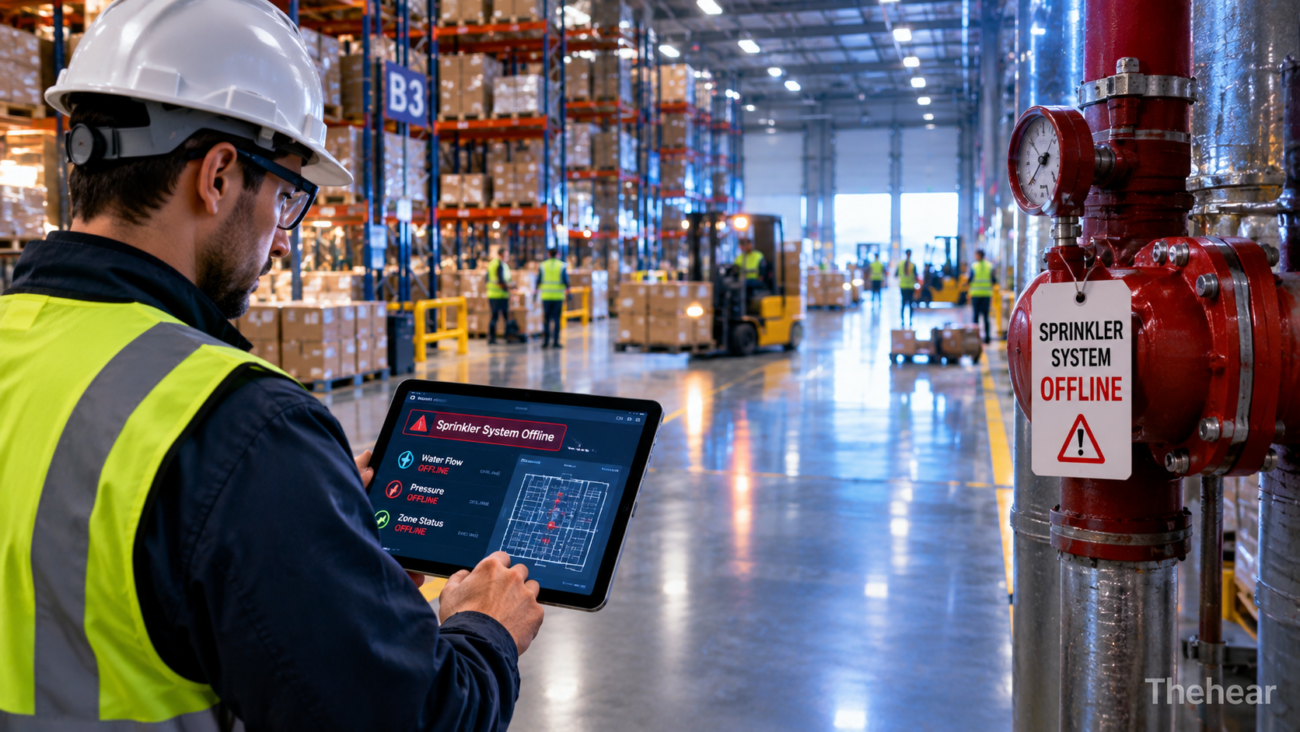
With each new fall comes the period of intense activity for all distribution centres around the United States. The growth in shifts, personnel, inventory, and conveyor use changes the facility from what it looked like during the inspection several months ago. At the same time, with the rise in building capacity, the risk of fire grows and reduces the margin of error in each additional pallet.
This annual situation raises a challenging question: how to act when it becomes necessary to turn off the sprinklers for repair at peak activity? Fire codes provide a clear response to this problem. In case of any malfunction, human intervention becomes necessary in order to ensure the safety of the building until its systems start working normally again. For the managers of large-scale e-commerce facilities, Amazon warehouse fire watch service is the accepted solution to this problem.
Why Peak Season Changes the Risk Profile
Several elements coincide between October and January:
- Greater storage capacity. Pallets reach maximum capacity through rack systems, and excess stock is found in the aisles.
- Increased combustibility of packages. Cardboard, plastics, foam packaging, and poly bags act as fuel for fires very quickly.
- Bigger manpower. More temporary workers unfamiliar with exit routes mean slower evacuation.
- Extended operating hours. Fewer quiet windows exist for maintenance, so repairs overlap with live operations.
The Hidden Weak Point: Impairments
No sprinkler system is ever without the need for maintenance. There will always be valve replacements, pipe corrosion, dry-pipe system trips, and building expansion that will require pipe rerouting. Any of these things will legally allow a zone to be placed out of service. The insurance companies and fire marshals will expect a notification of impairment, tagging or permitting of the zone, and constant monitoring of the zone.
Monitoring is not an easy task either. The monitors have to follow their specific paths, look at the clock, inspect all the electrical rooms, battery charging points, dock doors, and communicate directly with the local authorities.
Robotics, Batteries and New Ignition Sources
Automation has changed the modern-day floor. Automated drive units, sortation robots, and automated storage use lithium-ion batteries, which create charging stations that store a lot of energy in a small space. Thermal runaway fires burn hot and fast and create a great deal of toxic fumes. In an impairment, the charging bays are particularly critical to monitor because detection will rely solely on human senses.
What a Strong Interim Program Includes
An effective inspection process involves some common elements. Places which schedule an Amazon warehouse fire watch before starting work, as opposed to after closing a valve, will experience less surprises when overcoming impairments. These include the following:
- Notification. All three stakeholders, including the authority having jurisdiction, the insurance company, and the internal safety team, are notified of the impairment from the beginning.
- Qualified staff members. Guards who know how to prevent fires, use fire extinguishers, activate alarms, and assist in evacuation.
- Established rounds. Rounds conducted at predetermined times covering all impaired areas according to the local code.
- Detailed logs. Inspection reports with time stamps, identified hazards, and actions taken.
- Clear escalation. A direct line to dispatch and facility leadership for any sign of smoke, heat, or ignition.
- Restoration sign-off. Coverage continues until the system is verified as fully functional.
Planning Beats Scrambling
In many cases, interim protection is a part of the maintenance schedule for the entire year. Repairs are made in periods other than peak weeks, and there is always a vendor relationship prior to emergencies because this will minimise panic in case of emergency. Having a pre-arranged plan will decrease the time period between the identification of an impairment and arrival of qualified personnel.
Regulatory and Insurance Considerations
There are references to NFPA 25 and related procedures for impairment in local fire codes, and there are conditions set by insurance companies. Failing to maintain adequate coverage can result in violations, cancellation of policy or even losses in case of a fire. Evidence of compliance still provides one of the best safeguards for any operator.
Final Thoughts
It is the season of dense inventory, automation and high holiday volume that puts the autumn to the test for any logistics building. Proper preparation and procedures help prevent temporary impairment from turning into irreparable damage.
