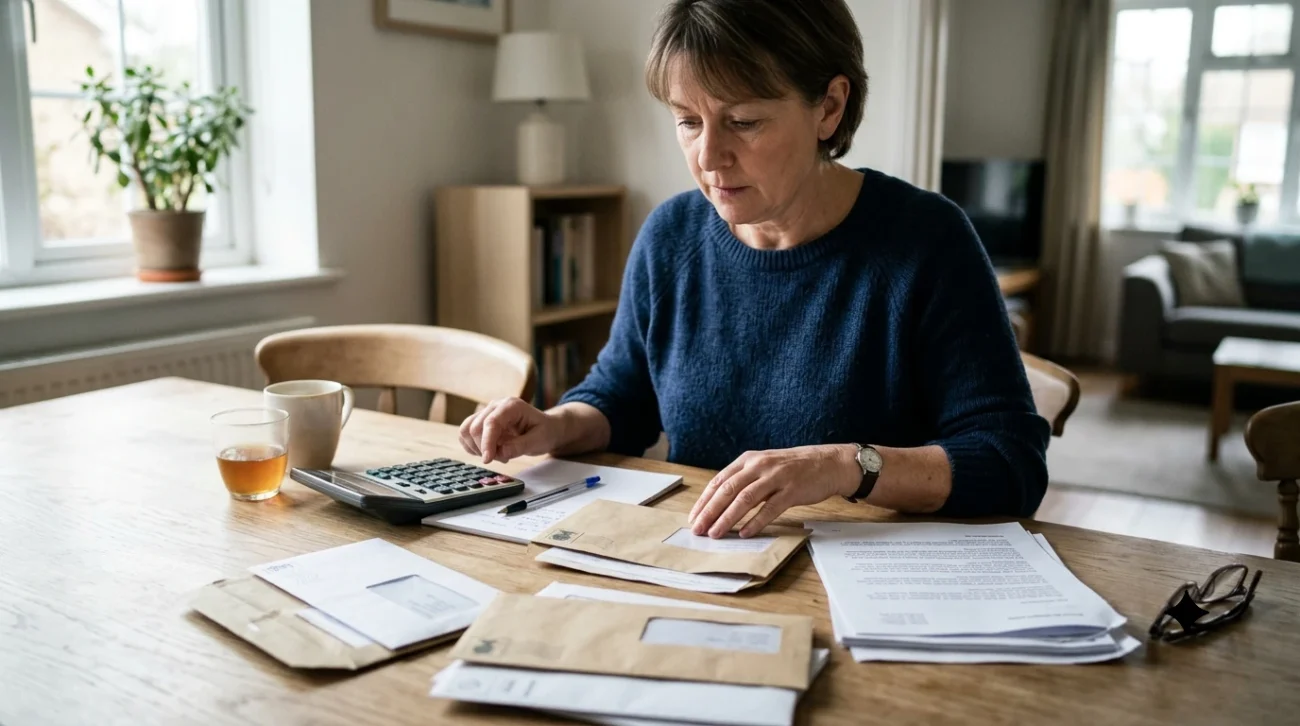
An HMRC savings tax letter usually means HM Revenue and Customs believes you received taxable savings interest and did not pay enough Income Tax during a previous tax year. It is not automatically a fine, an accusation of wrongdoing or the start of a tax investigation. In many cases, HMRC is simply using information supplied by banks and building societies to calculate tax that was not collected at source.
The document may be a PA302 Simple Assessment, a P800 tax calculation, a PAYE coding notice or a notice requiring you to file a Self Assessment return. That distinction matters because each document has a different purpose, deadline and response process. Before paying anything, check the document type, the tax year, HMRC’s interest figure and whether the calculation includes all the allowances available to you.
More savers have been drawn into this system as deposit rates have risen while the Personal Savings Allowance has remained unchanged. HMRC expects to issue around 1.8 million Simple Assessment letters for the 2025/26 tax year, although that total includes people with untaxed State Pension and other income as well as savings interest.
What an HMRC savings tax letter means
“HMRC savings tax letter” is not the official name of a single form. It is a phrase people commonly use after receiving a tax calculation or coding notice that refers to interest from savings accounts.
A PA302 Simple Assessment is a formal calculation and bill. HMRC generally issues one where it believes tax is due but the amount cannot be collected fully through a PAYE tax code. The assessment should show the income HMRC has used, tax already paid, the amount outstanding, a payment deadline and a 14-character payment reference beginning with the letter X.
A P800 is an end-of-year PAYE calculation. It compares the tax HMRC believes you should have paid with the amount actually deducted from employment or pension income. If a relatively small amount is due, HMRC may collect it through a future tax code rather than ask for an immediate lump-sum payment.
A P2 coding notice explains a change to your PAYE tax code. HMRC may reduce the tax-free amount in your code because it expects you to receive taxable savings interest during the current year. That estimate is often based on interest reported for an earlier year, so it may be wrong if your savings balance or account rate has changed.
A notice to file a Self Assessment return creates a separate legal obligation. HMRC’s published guidance says people with more than £10,000 of savings and investment income must register for Self Assessment, even though only part of that income may be taxable after allowances. A notice to file should not be ignored simply because you believe HMRC already has the bank information.
The first step, then, is not to calculate the bill. It is to identify exactly what HMRC has sent and what the document requires you to do.
Why more savers are receiving tax calculations
Since April 2016, most banks and building societies have paid interest without deducting basic-rate Income Tax. The Personal Savings Allowance was introduced at the same time, allowing many people to receive a set amount of interest at a 0% tax rate.
This removed the old system under which tax was commonly deducted before interest reached the account holder. It also meant that tax due above the available allowances had to be collected later through PAYE, Self Assessment, a P800 or Simple Assessment.
For several years, low savings rates kept many account holders below the taxable threshold. That changed as deposit rates increased. A saver with £20,000 earning 1% receives £200 a year, while the same balance earning 5% produces £1,000 before any compounding or interest from other accounts.
The Personal Savings Allowance has not risen with savings rates. Basic-rate taxpayers can generally receive up to £1,000 of savings interest at 0%, higher-rate taxpayers receive £500, and additional-rate taxpayers receive no Personal Savings Allowance.
HMRC introduced Simple Assessment in 2017 to deal with tax that could be calculated from information it already held without requiring a full tax return. Its use has grown as more people receive untaxed interest, taxable State Pension or other income that cannot be collected fully through PAYE.
For the 2025/26 tax year, HMRC said letters to working-age taxpayers began on 30 June 2026. Letters to pensioners were due to begin from 12 August 2026, followed by another group between October and December based on bank and building society interest data.
That timetable explains why someone may receive a savings-related letter months after the end of the tax year on 5 April. Banks first report the information to HMRC, which must then match it to individual taxpayer records and combine it with employment, pension and other income data.
How tax on savings interest is worked out
The Personal Savings Allowance is only one part of the calculation. Three separate tax-free amounts can apply to savings income, and they must be considered in the right order.
The first is the Personal Allowance. For both 2025/26 and 2026/27, the standard allowance is £12,570, although it may be reduced for people with adjusted net income above £100,000. If wages, pensions and other income do not use the full allowance, the unused portion can cover savings interest.
The second is the starting rate for savings. A person with low non-savings income may receive up to £5,000 of interest at a 0% rate. The band is reduced by £1 for every £1 of non-savings income above the Personal Allowance and is normally unavailable once non-savings income reaches £17,570.
The third is the Personal Savings Allowance. A basic-rate taxpayer usually receives £1,000, a higher-rate taxpayer receives £500, and an additional-rate taxpayer receives none. Interest itself is included when deciding which tax band applies, so it can push a person into the higher-rate band and reduce the allowance.
Suppose an employee earns £30,000 and receives £1,600 of taxable bank interest. The salary uses the Personal Allowance, and the person remains within the basic-rate band. The first £1,000 of interest is covered by the Personal Savings Allowance, leaving £600 taxed at 20%, which produces a bill of £120.
A higher-rate taxpayer with £60,000 of employment income and £2,000 of interest would usually receive a £500 Personal Savings Allowance. The remaining £1,500 would be taxed at 40%, creating a liability of £600, assuming no pension contributions, Gift Aid or other adjustments change the position.
The result can be different for someone on a low income. Consider a pensioner with £15,000 of non-savings income and £2,500 of interest. After the £12,570 Personal Allowance, £2,430 of non-savings income remains, reducing the £5,000 starting-rate band to £2,570. The full £2,500 of interest can fit within that band, leaving no savings tax to pay.
This is why the statement “interest above £1,000 is taxable” is often misleading. The correct answer depends on total income, tax band, unused Personal Allowance and access to the starting rate for savings.
Which interest HMRC may include
Taxable savings income can include interest from ordinary bank and building society accounts, credit unions, government and company bonds, peer-to-peer lending, some investment funds and certain insurance products. Interest paid as part of a PPI compensation settlement may also count.
Interest earned inside an Individual Savings Account does not count as taxable savings income. Premium Bond prizes are also tax-free, although interest from some other National Savings and Investments products can be taxable.
The provider’s name does not decide the tax treatment. An ordinary savings account held with the same bank as an ISA remains taxable, while the interest inside the ISA wrapper remains exempt.
Joint accounts can create errors. HMRC normally treats interest from a jointly held account as belonging equally to the account holders. If a two-person account earns £2,000, the usual starting position is £1,000 for each person, although a different split may apply where beneficial ownership is unequal and the correct notification has been made.
Fixed-term accounts need special attention because the tax year may depend on when the interest became available. If interest is paid only at maturity and cannot be accessed earlier, the full amount may fall into the year in which the bond matures. If interest is credited annually and can be withdrawn, even subject to a penalty, it may be taxable each year.
Bank rewards are another source of confusion. A payment described as a reward may be savings interest, an annual payment or miscellaneous income, depending on how it is calculated and whether it is linked to the account balance. The marketing label used by the bank does not settle the tax treatment.
Foreign interest may also need to be reported, but HMRC’s domestic bank-data process will not necessarily capture every overseas account. Residence status, exchange rates and credit for foreign tax can make these cases more difficult, and the absence of an HMRC letter does not prove that no tax is due.
How to check HMRC’s figures
HMRC receives interest data from banks and building societies after the tax year ends. It matches that data with employment, pension and other information held under your tax record.
The total on the letter may cover several accounts rather than showing a bank-by-bank breakdown. It can include closed accounts, dormant balances or accounts held under different trading names within the same banking group. That is why the figure may look unfamiliar even when it is broadly correct.
Errors do occur. Reported problems have included duplicated interest, estimated figures remaining on a record after actual figures arrive, ISA interest being treated as taxable, joint-account interest being allocated incorrectly and fixed-term interest being placed in the wrong tax year.
Start by gathering annual interest certificates and statements for every account held during the relevant tax year, including accounts you closed. Separate taxable accounts from ISAs and other exempt products, then check how joint-account interest has been divided.
For fixed-term savings, read the product conditions and confirm when the interest could first be accessed. Do not rely only on the period shown on an annual statement, because the tax point may depend on availability rather than the period over which interest built up.
Compare the total with HMRC’s calculation and check whether the Personal Allowance, starting-rate band and Personal Savings Allowance have been applied correctly. Also review tax already deducted through PAYE, previous payments, pension contributions and Gift Aid donations that may affect the final calculation.
HMRC can provide a breakdown of the interest data it holds. That information may identify the tax year, financial institution, account name, part of the account number and interest amount assigned to each account.
If you have received more than one PA302 for the same year, check the latest assessment carefully. A revised assessment normally shows the total tax due for the year, not a new bill to be added to the earlier one.
For example, if an earlier assessment showed £300 and a revised one shows £450, the revised total is usually £450. If you already paid £300, the remaining balance should be £150, subject to HMRC allocating the payment correctly.
Deadlines, disputes and payment
A Simple Assessment must be challenged within 60 days of the date on the letter if you believe the figures are wrong. You should tell HMRC which amount you dispute, what you believe the correct figure is and how you reached it.
HMRC may ask for bank statements, interest certificates, pension records or other documents. If it agrees, it should issue a revised assessment. If it rejects your correction, it will send a decision, and you will normally have 30 days to appeal.
Disputing a bill does not automatically pause the payment deadline. Unless HMRC agrees otherwise, the amount shown may still need to be paid while the issue is being resolved. If the assessment is later reduced, the excess should be credited or refunded.
For a PA302 issued before 31 October 2026 for the 2025/26 tax year, the normal payment deadline is 31 January 2027. If the letter is issued on or after 31 October, payment is generally due within three months of the date of the assessment. The deadline printed on the document should be treated as the controlling date.
Payment can usually be made through the HMRC app, online, by bank transfer or by cheque. The 14-character reference beginning with X should be used exactly as shown, because an incorrect reference can delay the payment being matched to the assessment.
Several smaller payments can be made before the deadline as long as the full balance arrives on time. If you cannot pay in full, contact HMRC before the due date to discuss a Time to Pay arrangement. HMRC will consider income, expenses, assets and the amount owed before agreeing a plan.
Late payment can lead to interest, penalties and debt-recovery action. Contacting HMRC early is generally safer than allowing the bill to become overdue without explanation.
You should also verify that the letter is genuine. Reach your Personal Tax Account through GOV.UK rather than clicking a link in an unexpected email or text, and obtain HMRC contact numbers independently. An official-looking logo, envelope or reference number is not proof that a payment request is genuine.
Common misunderstandings
A tax letter does not mean all your savings are being taxed. Income Tax applies to taxable interest after relevant allowances, not to the amount held in the account.
The £1,000 Personal Savings Allowance is not available to everyone. Higher-rate taxpayers usually receive £500, additional-rate taxpayers receive none, and low-income savers may qualify for a separate starting-rate band.
An HMRC estimate for the current year is not necessarily the same as the actual interest you will earn. If you moved money into an ISA, spent a temporary cash balance, closed an account or accepted a lower rate, a coding adjustment based on the previous year may be too high.
Receiving bank interest below £10,000 does not mean no tax is due. The £10,000 figure is linked to HMRC’s Self Assessment criteria, not to the point at which interest first becomes taxable.
Automatic bank reporting also does not remove your responsibility to check the position. HMRC may hold incomplete, duplicated or outdated information, and some foreign or unusual income may not be captured correctly.
The most serious mistake is ignoring a formal notice because the amount looks wrong. An assessment, coding notice or notice to file remains active until HMRC changes or withdraws it.
Frequently Asked Questions
Is an HMRC savings tax letter a fine?
Usually not. A PA302, P800 or coding notice normally reflects tax HMRC believes remains unpaid, rather than a penalty for misconduct. Interest and penalties may arise later if a valid bill is not dealt with by the deadline.
Why did HMRC tax my savings interest?
Most savings interest is paid without tax being deducted by the bank. HMRC may collect tax later if the interest exceeds your available Personal Allowance, starting-rate band or Personal Savings Allowance.
Do I pay tax on every pound of interest above £1,000?
Not always. A basic-rate taxpayer often has a £1,000 Personal Savings Allowance, but unused Personal Allowance or the starting rate for savings may cover more. Higher-rate taxpayers usually receive only £500.
Can HMRC include ISA interest in a tax calculation?
ISA interest should not be included as taxable savings income. If it appears to have been counted, obtain confirmation from the provider and ask HMRC to correct the record or assessment.
Can HMRC collect savings tax through my salary or pension?
Yes. HMRC can adjust a PAYE tax code to collect tax on expected savings interest or an earlier underpayment. Check the estimate because an unusually high balance in a previous year can lead to excessive deductions.
What should I do if HMRC sends two letters for the same tax year?
Check whether the later letter is a revised assessment showing the total liability rather than an extra bill. If one document is a Simple Assessment and the other is a notice to file Self Assessment, contact HMRC and ask how the duplicate position will be resolved.
Can I challenge a Simple Assessment after paying it?
Payment does not normally remove your right to dispute the figures within the relevant time limit. Contact HMRC within 60 days of the assessment date and provide the corrected amounts and supporting records.
Conclusion
HMRC savings tax letters are becoming more common as higher interest receipts bring more account holders above their tax-free allowances. For many people, the letter is a routine calculation rather than evidence of a serious tax problem.
The most useful response is to identify the document, rebuild the interest figure from your own records and check that the correct allowances have been applied. Pay particular attention to ISAs, joint accounts, fixed-term bonds and revised assessments.
Act within the stated deadlines even if you disagree with the calculation. A formal assessment or filing notice does not disappear until HMRC amends or withdraws it.
As HMRC relies more heavily on financial data, accurate personal records matter more, not less. Keeping annual interest certificates and checking your tax account can prevent an incorrect code, a duplicated bill or a much longer dispute later.
